

The Territory
The 50 Villages and their Art
In every hamlet of 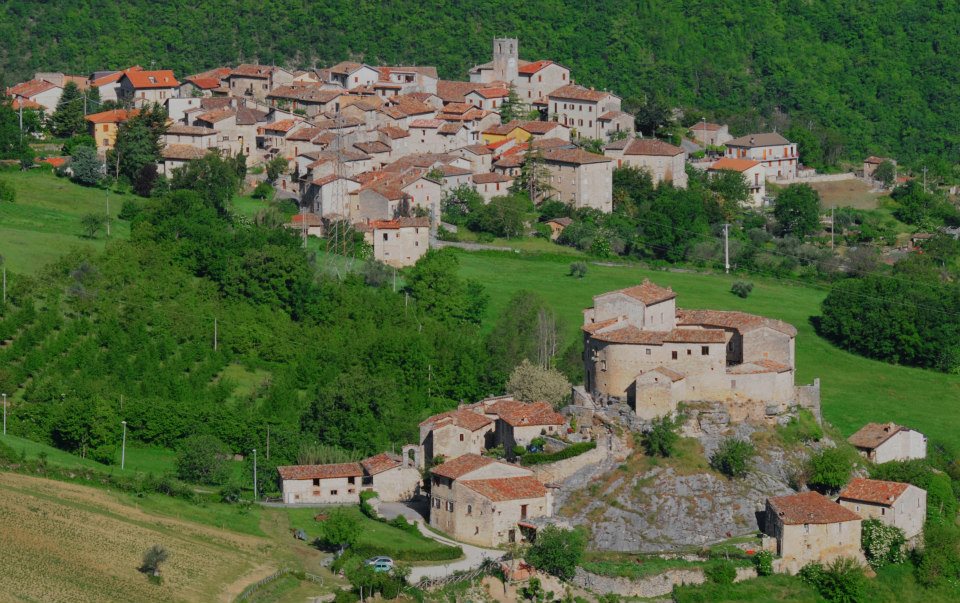 Acquasanta there are notable artistic and architectural elements. In the main town, the Church of San Giovanni Battista (13th century) and the Church of the Magdalene (14th century) which preserves a fresco depicting a sick person healed by sulfurous water.
In the Church of San Lorenzo in Paggese from the 13th century, you can admire Alemanno’s triptych, a canvas by N. Monti and a 16th-century travertine tabernacle. In Quintodecimo the Church of Santa Maria delle Piane was frescoed by P. Mussini and the Church of the Crucifix features a 16th-century travertine portal carved presumably by the same artist who executed the sandstone one of the patron church of San Martino. Solitary, in Valledacqua, stands the Farfa abbey of San Benedetto.
In the 16th century the inhabitants of Fleno, a village at 1,000 meters, commissioned a student of Crivelli to create a fresco that still decorates the Church of San Pietro and, in Capodirigo, carved in 1500 on the portal of the Church of Santa Catherine of Alexandria, a King, offering her gifts in vain, implores death to spare him.
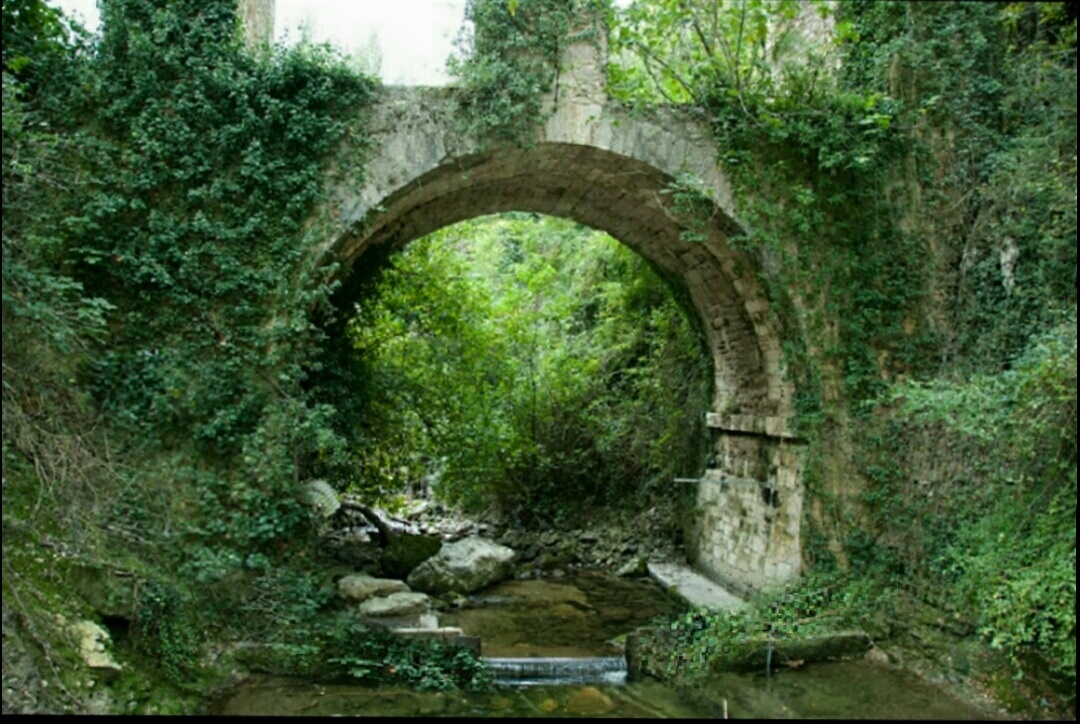
Grandiose are the Roman vestiges from the Augustan era of the ancient Via Salaria: various supporting walls of “Opus Quadratum” and the Bridge over the Garrafo Stream. Comacine masters in the 16th century built the “Old Bridge” in Ponte d’Arli, replacing the wooden one that the impetuous Tronto would destroy with every flood.
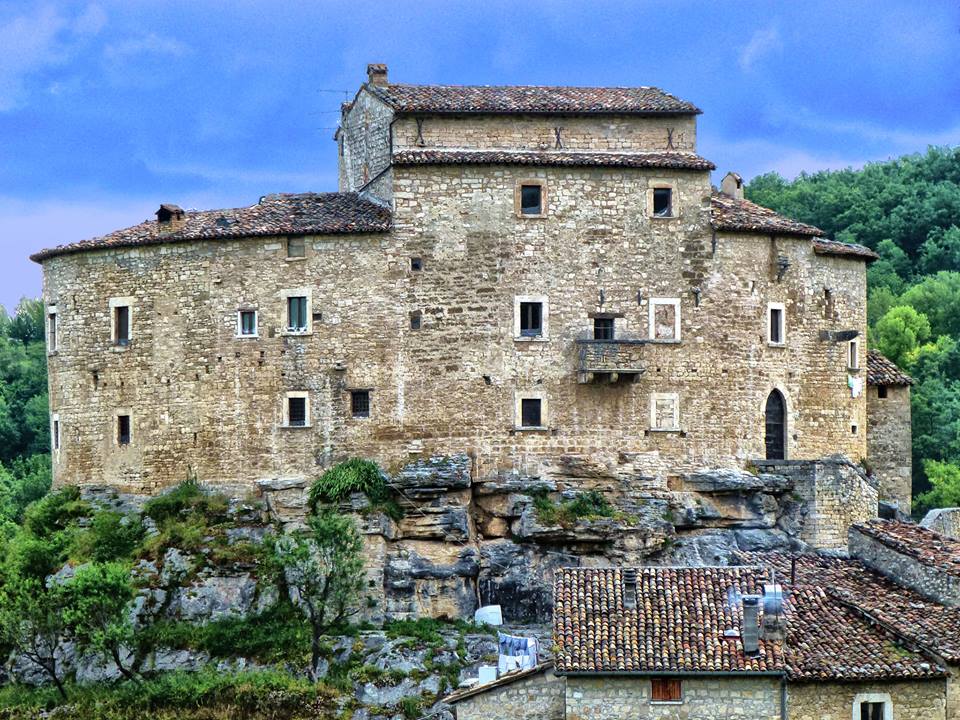
Interesting is the Bridge over the Tronto from the 17th century in Quintodecimo. Unique is the Manor of Castel di Luco: with a circular plan, it follows the shape of the compact travertine cliff on which it stands and from which it seems to be the continuation in a continuity of form and materials. At 750 meters the mighty ruins of the Fortress of Montecalvo guard the San Paolo pass, watershed between the Tronto basins and the Castellano stream.
The thermal baths between the 2 National Parks
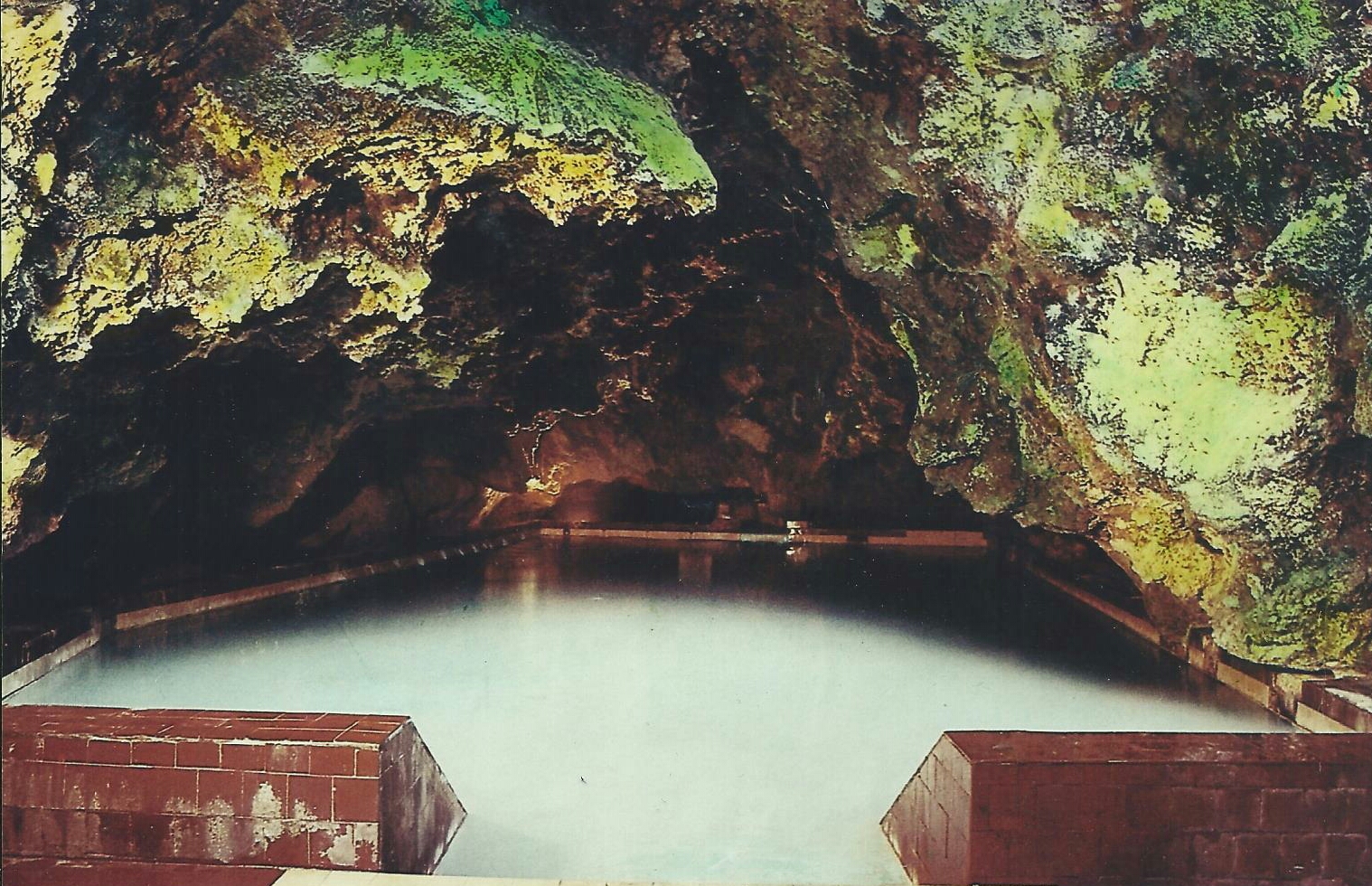 The name of this pre-mountain center refers to the presence, in the subsoil, of abundant hydrosulfurous springs saturated with iodine and iron, flowing from intricate natural meanders. The waters were already known to the Romans, who used them to heal the wounds of legionaries and to restore their strength. The locality was well known, it was indicated on maps associated with an inscription indicating the thermal baths; there were even those who claimed that those waters preserved from aging and guaranteed a long and healthy life. According to testimonies of the time, even Emperor Augustus found vigor and health in Acquasanta. In the cave with natural pool one immerses in the hot, blue waters, fragrant with sulfur. There is also a natural sudatory cave, where the waters, reaching high temperatures, generate steam so it is possible to stop for a healthy sauna, in that strange cavity adorned with stalagmites and stalactites, with a thousand colors created by the microscopic algae that grow luxuriantly in their natural habitat. Today the cave is used only as a sauna but we know that in the past, in some civilizations people used to stay for long periods inside sudatory caves and then emerged purified, both in body and spirit.
The town is embraced by the river beds of the Tronto and the Castellano and is considered a kind of paradise for fishermen, as the waters host trout in abundance.
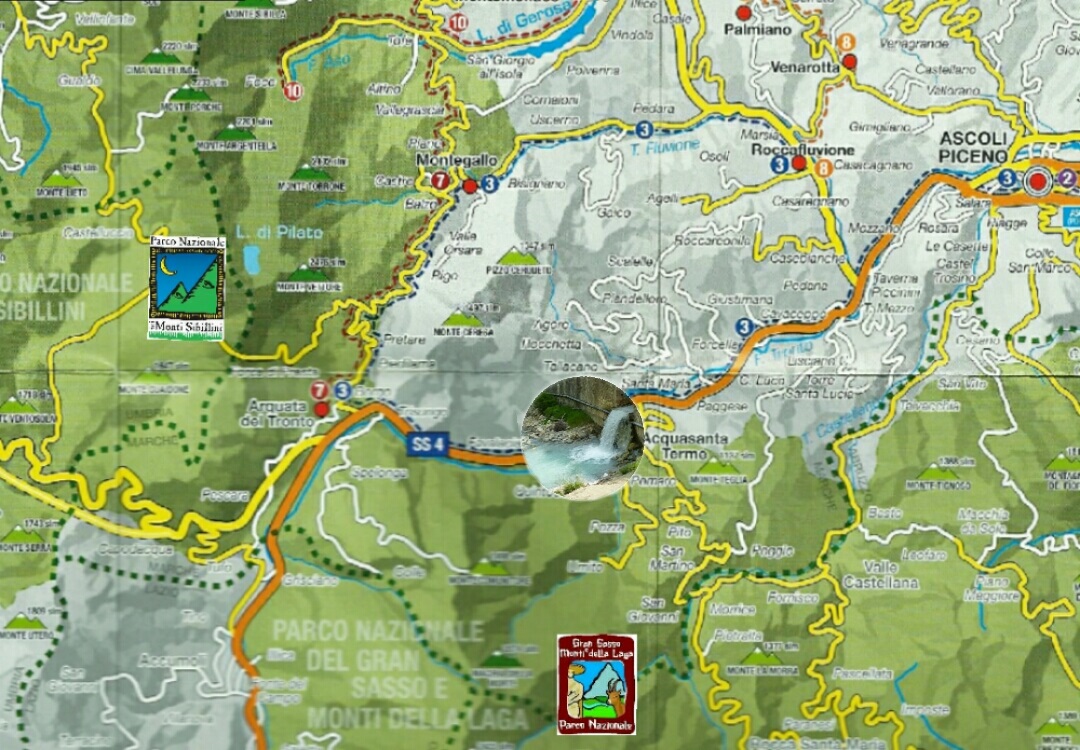 A peaceful place surrounded by extensive woods of oaks, chestnuts, beeches and firs, Acquasanta enjoys a very favorable tourist position, which in addition to being the meeting point between the 2 National Parks, of the Laga Mountains and the Sibillini Mountains, is also the center between different natural landscapes: one step from the mountains and two steps from the sea. Part of the Acquasanta territory in fact, specifically the Prata and Volpara waterfalls, falls within the Gran Sasso and Laga Mountains National Park; continuing further ahead, towards Rome, there is the Sibillini Mountains National Park.
The perfect place to stay, because given its position, you can reach various tourist, religious and gastronomic territories of other regions in very little time: Norcia, Cascia, Assisi, Terni, Spoleto in Umbria, Amatrice Rieti Rome in Lazio, L’Aquila in Abruzzo.